Your cart is currently empty!
You may check out all the available trips and book one that suits you.
Continue Browsing Trips
You may check out all the available trips and book one that suits you.
Continue Browsing TripsAzterra Travel organises hands-on workshops and tasting experiences in Baku and across Azerbaijan. These activities are a great way to bring people together, learn something new and enjoy local traditions.
Looking for something different for your corporate event or group gathering? We can arrange workshops at your chosen venue or organise them at a suitable location. Prices depend on the number of participants, duration, venue and type of activity.
Our cooking classes introduce participants to the flavours and traditions of Azerbaijani cuisine. Under the guidance of local chefs, guests learn to prepare traditional dishes using authentic recipes and ingredients.
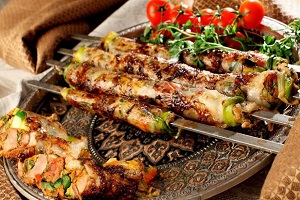
Lula kebab is one of the most challenging dishes to prepare on a traditional Azerbaijani charcoal grill. Getting the right texture and keeping the meat juicy requires both skill and experience.
During this hands-on cooking class, our chef will show you how to prepare authentic lula kebab, from finding the right balance of lamb and tail fat to shaping the meat onto skewers, grilling it over charcoal and serving it the traditional way.
Cooking shashlik over charcoal is a favourite tradition at family gatherings and outdoor celebrations in Azerbaijan. There are many varieties, made with lamb, beef, chicken, vegetables and even fruit.
In this cooking class, you’ll learn the essentials of preparing Azerbaijani shashlik:
The class ends with a tasting of everything you’ve cooked.
Dolma holds a special place in Azerbaijani cuisine. There are hundreds of regional variations, including dolma made with grape leaves, cabbage and stuffed vegetables. Fillings can range from minced lamb to fish, herbs, vegetables and nuts.
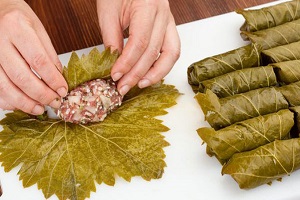
One of the most popular versions is made with seasoned minced lamb wrapped in grape leaves. Preparing it takes patience and a delicate touch, as traditional Azerbaijani dolma is often no bigger than a walnut.
During the workshop, our chef will teach you how to prepare the filling, wrap the grape leaves and cook dolma using traditional methods. You’ll also learn about the ingredients and regional variations that give this dish its distinctive flavour.
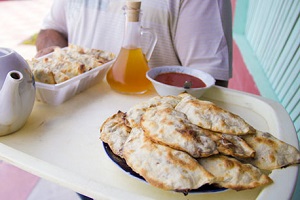
Qutab is a traditional Azerbaijani flatbread made from thin, unleavened dough folded into a half-moon shape around a filling. Popular varieties include minced lamb, fresh herbs, pumpkin and cheese.
During this cooking class, you’ll learn how to roll the dough to the right thickness, prepare different fillings and cook qutab on a traditional saj griddle.
Meat qutab is usually served with sumac, while herb-filled varieties are particularly good with qatıq, a traditional yoghurt, sometimes mixed with garlic.
Every region of Azerbaijan has its own way of preparing qutab. One of the most distinctive varieties comes from Jorat, a settlement on the Caspian coast near Baku.
Jorat qutab differs from the usual thin flatbread. It is smaller, thicker and has a slightly puffed appearance. Traditional fillings include meat, cheese and pumpkin, and the flatbreads are cooked over an open flame in a special oven.
In this workshop, you’ll learn what makes Jorat qutab different and how to prepare this regional speciality.
Dushbara is a traditional Azerbaijani soup made with tiny meat-filled dumplings served in a rich broth.
Making dushbara is a time-consuming process, and traditionally the whole family would gather to help prepare the dumplings. According to a popular saying, a skilled cook should be able to fit 40 dushbara into a single spoon!
The soup is served differently across Azerbaijan. In Ganja, fresh coriander is a popular addition, while other regions use sumac, dried mint or a sauce made with vinegar and crushed garlic.
During this cooking class, you’ll learn how to prepare the filling, fold the tiny dumplings and make a flavourful broth.
Shah plov, also known as King’s Pilaf, is one of the most impressive dishes in Azerbaijani cuisine. Traditionally prepared for weddings, celebrations and honoured guests, it is as much about presentation as it is about flavour.
What makes shah plov special is its golden, crispy lavash crust, which surrounds a filling of fragrant rice, tender meat, dried fruits and other ingredients.
During the workshop, our chef will guide you through the preparation of this festive dish, including layering the ingredients, arranging the lavash and achieving the signature golden crust.
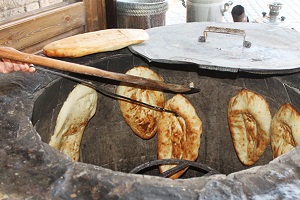
Tandir chorek is traditional Azerbaijani bread baked inside a clay oven known as a tandir.
The oven is heated with firewood until its walls become hot enough for baking. The dough is then carefully attached to the inside walls, where it bakes at a high temperature and develops a golden crust and a distinctive aroma.
During this workshop, you’ll learn how traditional tandir bread is prepared and watch the baking process up close. With guidance from an experienced baker, you’ll have the opportunity to try this centuries-old technique yourself.
The historic city of Sheki is famous for its food, and piti is one of its best-known specialities.
This rich, slow-cooked dish is traditionally prepared in individual clay pots, with lamb, chickpeas, potatoes and other ingredients. It takes several hours of gentle cooking to develop its characteristic flavour.
Piti is also unusual in the way it is served. First, the broth is poured into a bowl and enjoyed as a soup. The remaining ingredients are then served separately as the main course.
During this cooking class, you’ll learn about the ingredients, traditional preparation and serving customs of authentic Sheki piti.
Discover traditional Azerbaijani crafts and culture through hands-on workshops, including carpet weaving, traditional embroidery, pottery and folk dancing.
Lahij is one of Azerbaijan’s oldest centres of traditional craftsmanship, particularly famous for its copperware.
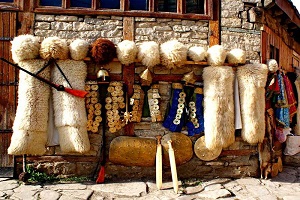
In the 19th century, around 40 different crafts were practised in this mountain village. Today, only a handful remain, with copperworking among the most important. Walking through Lahij, you can still hear the sound of hammers coming from small workshops where craftsmen continue traditions passed down through generations.
During this workshop, local artisans, some representing the fourth generation of their families, will introduce you to traditional metalworking techniques and demonstrate how copper objects are shaped and decorated by hand.
Lahij is also home to skilled leatherworkers, jewellers and other traditional craftsmen.
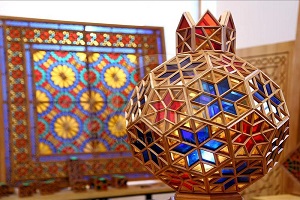
Shebeke is a traditional Azerbaijani art form that combines coloured glass with intricately carved wooden pieces to create geometric patterns.
What makes shebeke remarkable is that the pieces fit together without nails or glue. This technique has been used for centuries to decorate the windows and doors of palaces, mosques and historic houses. One of its finest examples can be seen at the Palace of the Sheki Khans.
During the workshop, you’ll see how a shebeke panel is created, from the initial design to the final assembly.
The process begins with a geometric pattern drawn to scale. The craftsman then carefully prepares the wooden framework, cuts the individual pieces and fits the coloured glass into place.
You’ll have the opportunity to observe the precision and patience required to create this distinctive Azerbaijani craft.
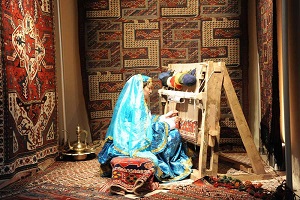
Carpet weaving is one of Azerbaijan’s oldest and most important artistic traditions. For centuries, handmade carpets have been used to decorate homes, cover floors and express the cultural identity of different regions.
Azerbaijani carpets are known for their distinctive patterns, colours and weaving techniques. Each region has developed its own style, influenced by local traditions, landscapes and history.
Baku carpets, for example, are recognised for their detailed ornaments, rich colours and delicate patterns, often featuring geometric shapes and floral designs.
During this hands-on workshop, you’ll learn about traditional Azerbaijani carpet weaving, discover the meanings behind different patterns and see how skilled weavers create intricate designs using techniques passed down through generations.
You’ll also have the opportunity to try weaving yourself under the guidance of an experienced craftsperson.
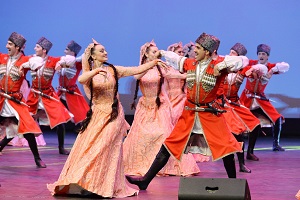
Traditional Azerbaijani dances reflect the country’s history, music and cultural identity. Each dance has its own rhythm, movements and character, ranging from graceful and expressive performances to energetic group dances.
Azerbaijani folk dancing includes ceremonial, wedding, military and traditional group dances. Among the best-known examples are Yalli, a lively group dance, and Jangi, traditionally associated with strength and courage.
During this workshop, professional dancers will introduce you to the basic movements and rhythms of Azerbaijani folk dancing.
You’ll learn about the traditions behind different dances and have the opportunity to practise the steps yourself.
Kelaghayi is a traditional Azerbaijani silk headscarf and an important part of the country’s cultural heritage.
These colourful scarves are decorated with patterns that often carry symbolic meanings. Traditional designs are applied using carved wooden stamps known as galib, along with special dyeing techniques.
During this workshop, you’ll learn about silk painting and the traditional methods used to decorate kelaghayi.
The workshop introduces two main techniques:
You’ll have the opportunity to experiment with colours and decorative patterns while learning about this distinctive Azerbaijani tradition.
Pottery is one of the oldest crafts in Azerbaijan, with traditions that date back thousands of years.
This hands-on workshop gives you the opportunity to work with clay and learn how everyday objects and decorative pieces are made.
Under the guidance of an experienced potter, you’ll discover the basic properties of clay, learn traditional shaping techniques and try creating your own ceramic piece.
The workshop is suitable for beginners and participants of different ages.
The session lasts approximately two hours. Finished pieces are then fired in a kiln.
Ceramic painting is the decorative stage of pottery making, when a finished ceramic object is given its colours, patterns and individual character.
Traditional Azerbaijani ornaments are often used in ceramic decoration, including floral patterns and geometric designs.
During this workshop, you’ll learn different techniques for decorating ceramics, including painting with coloured slips and creating decorative effects inspired by traditional majolica.
With guidance from an experienced artist, you’ll have the opportunity to decorate your own ceramic piece using colours and patterns of your choice.
Jewellery making has a long history in Azerbaijan, where traditional ornaments often feature intricate metalwork and symbolic designs.
This workshop introduces participants to the basic techniques used by professional jewellers. No previous experience is required.
Depending on the piece you choose to create, you may learn techniques such as cutting, filing, polishing, soldering, metal texturing and decorative stamping.
The workshop also introduces traditional Azerbaijani jewellery motifs, including the buta pattern and the pomegranate (nar), both widely used in local decorative arts.
Under the guidance of an experienced jeweller, you’ll have the opportunity to create a piece of jewellery inspired by Azerbaijani traditions.





350+ Reviews

When you choose Azterra Travel, you can focus on enjoying your trip while we take care of the details. We believe good service means going beyond expectations and making every guest feel welcome. In Azerbaijan, we call this hospitality.