Your cart is currently empty!
You may check out all the available trips and book one that suits you.
Continue Browsing Trips
You may check out all the available trips and book one that suits you.
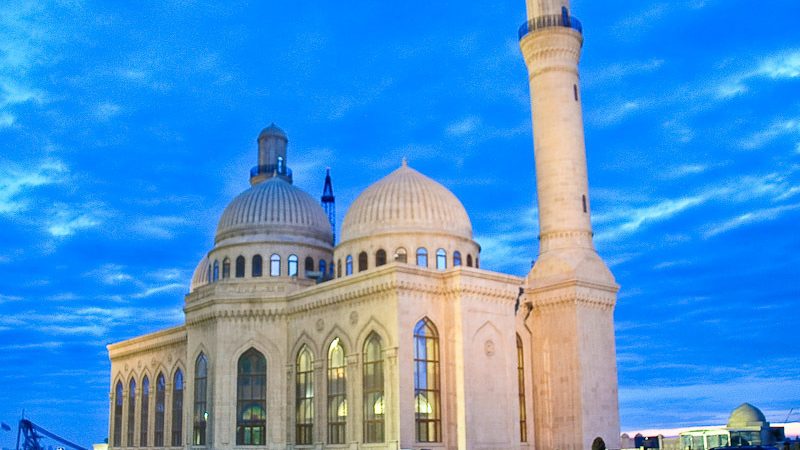
Continue Browsing TripsBibi-Heybat Mosque is one of Baku’s most beautiful and significant religious landmarks. Located near the shores of the Caspian Sea, this magnificent mosque is admired for its elegant Islamic architecture, impressive domes, and rich spiritual heritage.
The mosque is an important pilgrimage destination for Shia Muslims and a remarkable example of Azerbaijan’s religious and architectural traditions.
Although the present building was reconstructed in the late 20th century, its history dates back to the 13th century, making Bibi-Heybat one of the most historically significant religious sites in the Baku region.
History of Bibi-Heybat Mosque
The original Bibi-Heybat Mosque was built during the 13th century, when the region was ruled by the Shirvanshahs.
The mosque was constructed around the tomb of Ukeyma Khanum, traditionally believed to be a daughter of Musa al-Kazim, the seventh Imam in Shia Islam.
According to religious tradition, Ukeyma Khanum was a descendant of the Prophet Muhammad, making the site particularly sacred to Shia Muslims.
Over the centuries, Bibi-Heybat became an important pilgrimage destination, attracting worshippers from Azerbaijan and neighboring regions.
The religious complex gradually expanded, incorporating additional burial sites and structures associated with prominent religious figures.
Destruction and Reconstruction
In 1936, the original Bibi-Heybat Mosque was demolished during the Soviet government’s campaign against religious institutions.
The destruction resulted in the loss of an important medieval architectural monument.
Decades later, efforts began to restore the historic religious complex.
Reconstruction work was carried out during the 1990s, using historical photographs, architectural descriptions, and other surviving documentation to recreate the mosque’s traditional appearance.
The reconstructed mosque reopened in 1999, restoring one of Azerbaijan’s most important religious landmarks.
Today, Bibi-Heybat Mosque stands as a symbol of the preservation and revival of the country’s cultural and spiritual heritage.
Architecture of Bibi-Heybat Mosque
The reconstructed Bibi-Heybat Mosque reflects the traditions of Azerbaijani Islamic architecture.
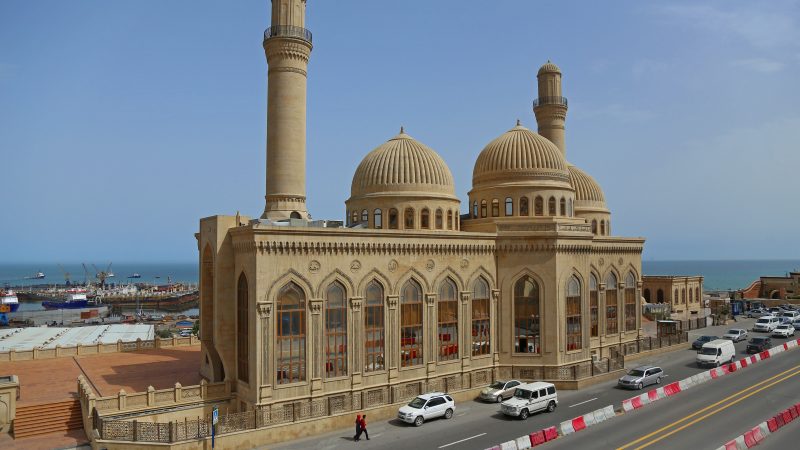
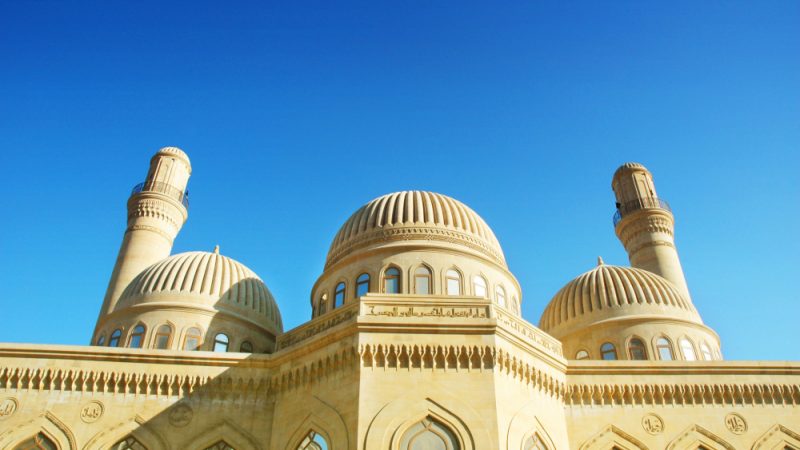
Its exterior is distinguished by three elegant domes, two slender minarets, and decorative stonework inspired by the historic mosque.
The building combines traditional architectural elements with carefully designed ornamental details.
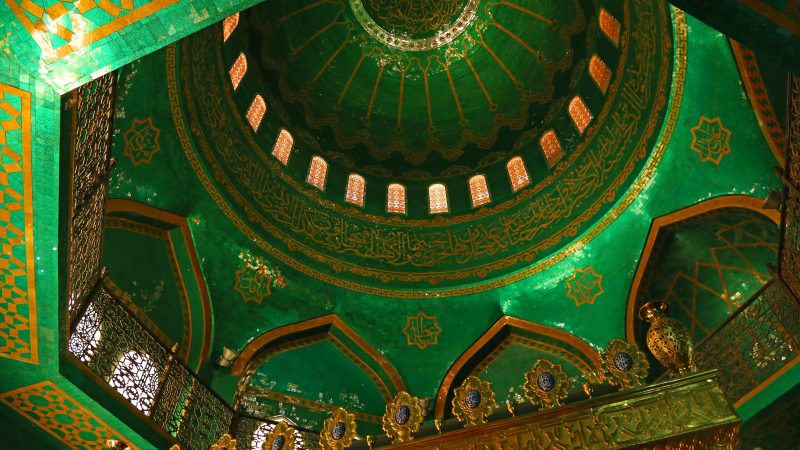
Inside, visitors can admire intricate geometric patterns, decorative calligraphy, and beautiful combinations of turquoise and gold.
Quranic inscriptions and elaborate interior decorations create a peaceful and impressive atmosphere.
The mosque’s spacious prayer halls and carefully designed architectural features reflect its importance as both a place of worship and a cultural landmark.
Religious and Cultural Significance
Bibi-Heybat Mosque remains an active place of worship and an important spiritual destination for Muslims.
The tomb of Ukeyma Khanum gives the site particular significance within Shia Islamic traditions.
Pilgrims visit the mosque to pray, pay their respects, and connect with the religious heritage of the region.
Beyond its spiritual importance, Bibi-Heybat represents an essential part of Azerbaijan’s cultural identity and historical connection with Islamic civilization.
Visiting Bibi-Heybat Mosque
Bibi-Heybat Mosque is located along the coastal road south of central Baku, making it a convenient stop for travelers exploring the city’s surroundings.
The mosque’s impressive architecture and peaceful atmosphere attract visitors interested in history, religion, and photography.
Its location near the Caspian Sea also provides beautiful views of the surrounding coastal landscape.
As Bibi-Heybat is an active religious site, visitors should dress modestly, remain respectful, and avoid disturbing worshippers during prayer times.
A visit to Bibi-Heybat Mosque offers an opportunity to discover one of Baku’s most important religious landmarks and appreciate the beauty of traditional Azerbaijani Islamic architecture.
Address: 2 Bibi-Heybat Road, Baku
Open: Daily
Entrance Fee: Free
Recommended Visit Duration: 10–20 minutes
Dress Code: Modest clothing required; women should cover their heads.
Rate this page
Rating 4.7 / 5. Votes: 322
No ratings yet