Your cart is currently empty!
You may check out all the available trips and book one that suits you.
Continue Browsing Trips
You may check out all the available trips and book one that suits you.
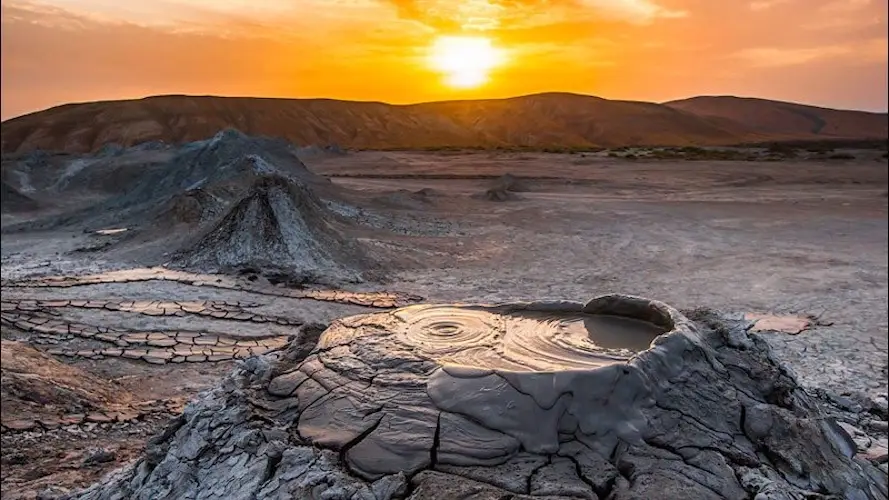
Continue Browsing TripsThe Gobustan Mud Volcanoes are among Azerbaijan’s most unusual natural attractions, offering visitors a chance to experience an extraordinary landscape of bubbling mud, miniature craters, and rolling volcanic hills.
Azerbaijan is home to one of the world’s largest concentrations of mud volcanoes, with hundreds of these remarkable geological formations scattered across the country, particularly around the Absheron Peninsula and Gobustan region.
Unlike traditional volcanoes that erupt molten lava, mud volcanoes release mixtures of mud, water, and underground gases. Their constantly changing surfaces create a fascinating landscape that often resembles another planet.
What Are Mud Volcanoes?
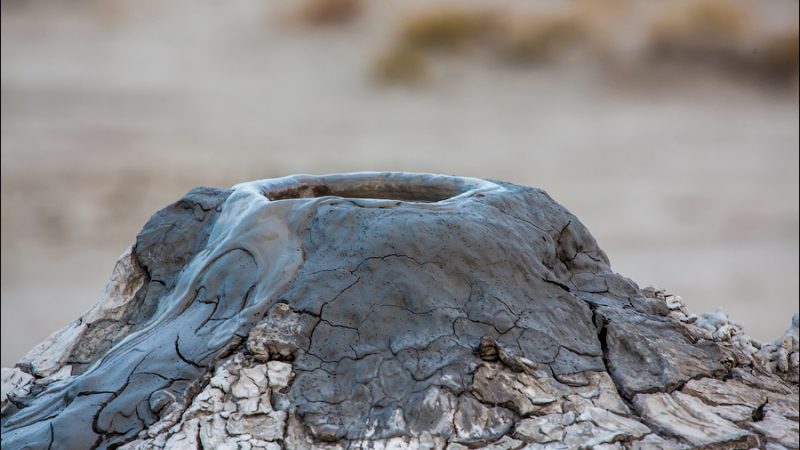
Mud volcanoes are geological formations created when underground gases and pressurized fluids force mud and sediment toward the Earth’s surface.
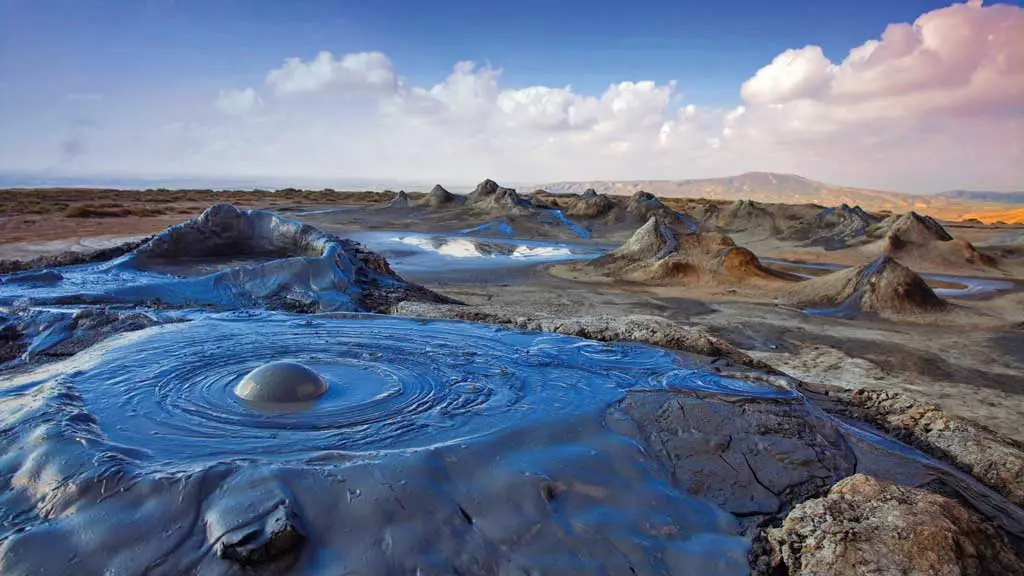
As the mixture rises, it forms small cones, bubbling pools, and craters that continuously release mud and gas.
Most mud volcanoes are relatively small, sometimes reaching only a few meters in height. However, some formations can grow into large hills hundreds of meters tall.
The activity of mud volcanoes is closely connected with underground geological processes and is often associated with regions containing oil and natural gas deposits.
Mud Volcanoes in Azerbaijan
Azerbaijan is internationally recognized for its remarkable concentration and variety of mud volcanoes.
Many are located in the Gobustan region, approximately an hour’s drive from Baku.
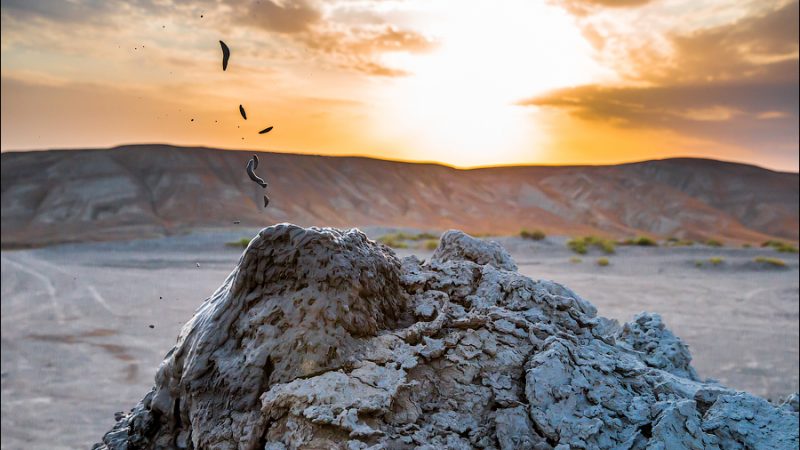
Some volcanoes produce small bubbles of mud almost continuously, while others remain relatively quiet for long periods before experiencing more powerful eruptions.
Large eruptions can release significant amounts of gas and mud, sometimes accompanied by flames when escaping gases ignite.
Although the smaller bubbling mud craters are fascinating to observe, visitors should remain on designated paths and follow local safety instructions.
A Landscape That Resembles Mars
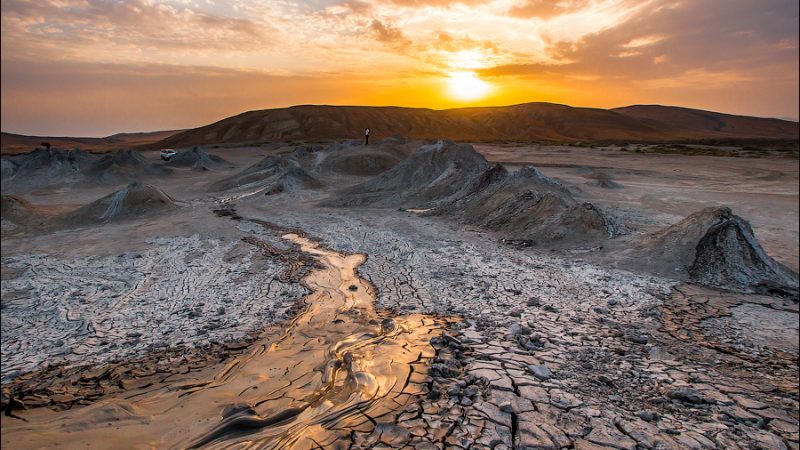
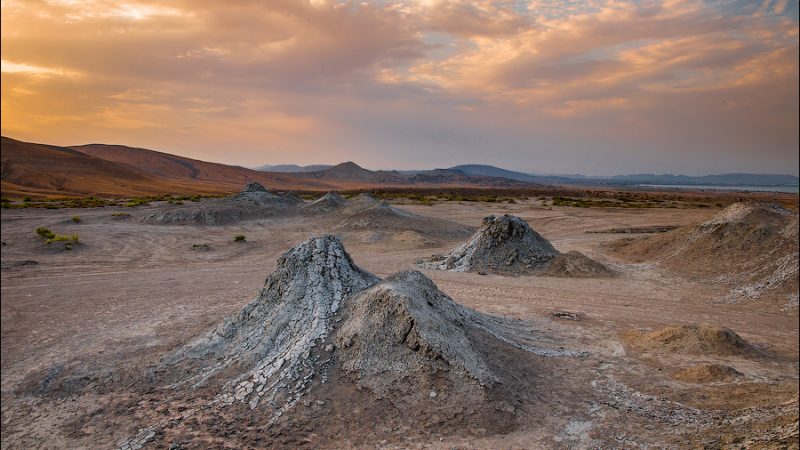
One of the most fascinating features of Gobustan’s mud volcanoes is their unusual appearance.
The dry, cracked ground, gray mud formations, and barren hills create a landscape often compared to the surface of Mars.
Scientists studying planetary geology have examined terrestrial mud volcanoes as possible analogues for certain geological formations observed on Mars.
These comparisons have helped researchers investigate how underground fluids and gases may shape planetary surfaces.
For visitors, the result is an extraordinary natural environment that feels completely different from the surrounding landscapes of Azerbaijan.
Toraghay Mud Volcano
Toraghay is one of Azerbaijan’s largest and most impressive mud volcanoes, located in the southern part of the Gobustan region.
Rising approximately 400 meters above the surrounding landscape, it is known for its enormous volcanic structure and long history of geological activity.
Historical records document several eruptions, demonstrating the powerful natural forces responsible for shaping the region.
Toraghay is an important geological landmark, although it is not part of the usual tourist route to the smaller mud volcanoes near Gobustan.
Visiting the Gobustan Mud Volcanoes
The mud volcanoes near Gobustan are among the most popular natural attractions for visitors traveling outside Baku.
Here, tourists can observe small volcanic cones, bubbling mud pools, and unusual geological formations at close range.
The surrounding landscape offers excellent opportunities for photography, particularly for visitors interested in nature and unusual geological phenomena.
A visit to the mud volcanoes is often combined with Gobustan National Park, a UNESCO World Heritage Site famous for its prehistoric rock carvings.
Together, these attractions offer a fascinating combination of Azerbaijan’s natural wonders and ancient history.
Address: Gobustan, Garadagh District, approximately 70 km from Baku
Open: Daily
Recommended Visit Duration: 1–1.5 hours
Rate this page
Rating 4.7 / 5. Votes: 479
No ratings yet