Your cart is currently empty!
You may check out all the available trips and book one that suits you.
Continue Browsing Trips
You may check out all the available trips and book one that suits you.
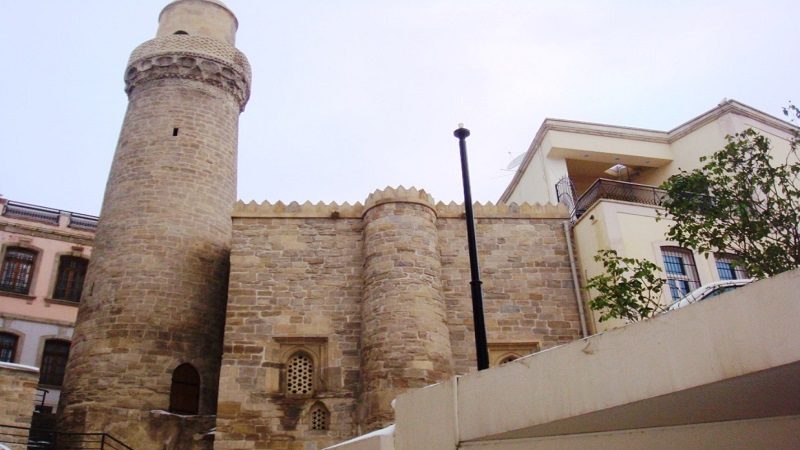
Continue Browsing TripsMuhammad Mosque, also known as Siniggala Mosque, is one of the oldest surviving Islamic monuments in Baku. Located in the heart of the Old City (Icherisheher), this historic mosque dates back to the 11th century and represents an important part of Azerbaijan’s medieval architectural heritage.
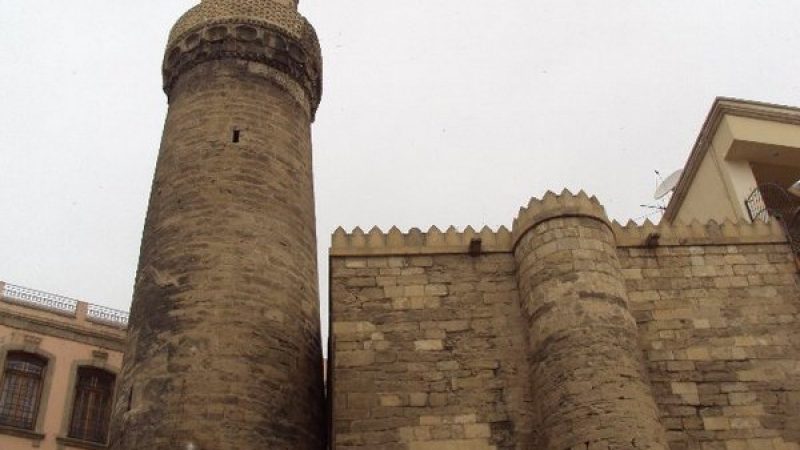
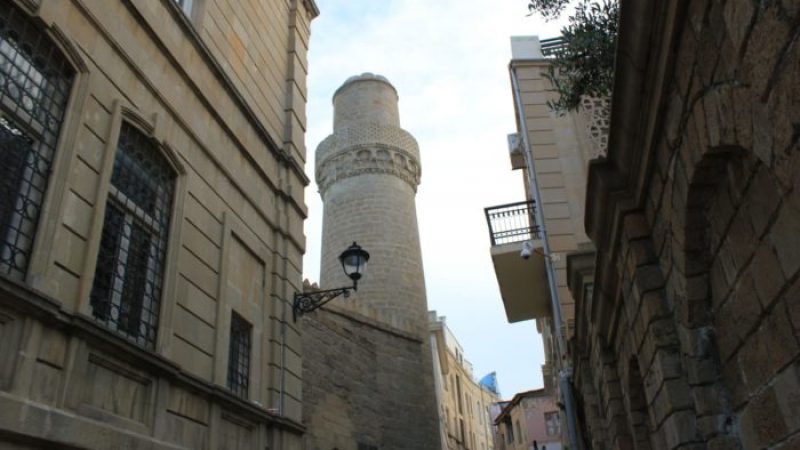
Although modest in size, Muhammad Mosque is particularly famous for its ancient minaret, distinctive stone architecture, and fascinating history connected with the Russian naval attack on Baku in 1723.
Today, the mosque remains an important historical landmark within the UNESCO-listed Old City of Baku.
History of Muhammad Mosque
Muhammad Mosque was built in 1078–1079, making it one of the earliest surviving mosques in Baku.
The construction date is known from an Arabic inscription discovered on the mosque, which identifies Muhammad ibn Abu Bakr as the person responsible for its construction.
The inscription provides valuable historical evidence about the development of Islamic architecture in medieval Baku.
Some researchers suggest that the mosque may have been constructed on the site of an earlier religious building, although the exact history of the location remains uncertain.
Over the centuries, the mosque underwent several changes and restorations, while its historic minaret remained one of its most significant architectural features.
Why Is It Called Siniggala Mosque?
The mosque is also widely known as Siniggala, an Azerbaijani name commonly interpreted as “Broken Tower.”
This unusual name is connected with the events of 1723, when Russian naval forces attacked Baku during Peter the Great’s Persian Campaign.
During the bombardment, artillery fire damaged the upper section of the mosque’s minaret.
According to local tradition, a powerful storm suddenly struck the Caspian Sea after the attack, forcing the Russian ships away from the city.
The story became part of Baku’s historical folklore, and the damaged minaret gave the mosque its popular name, Siniggala.
The repaired section of the minaret can still be distinguished by differences in the stonework, serving as a reminder of the building’s turbulent past.
Architecture of Muhammad Mosque
Muhammad Mosque is an excellent example of early medieval Islamic architecture in Azerbaijan.
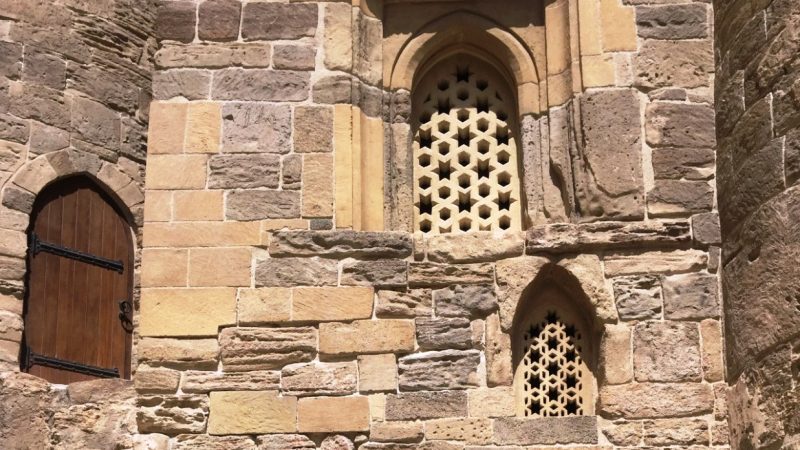
The building is constructed from local limestone, a traditional material widely used in the historic buildings of Baku Old City.
Its relatively simple exterior reflects the architectural traditions of the Shirvan-Absheron region, where carefully shaped stonework and restrained decorative elements were commonly used.
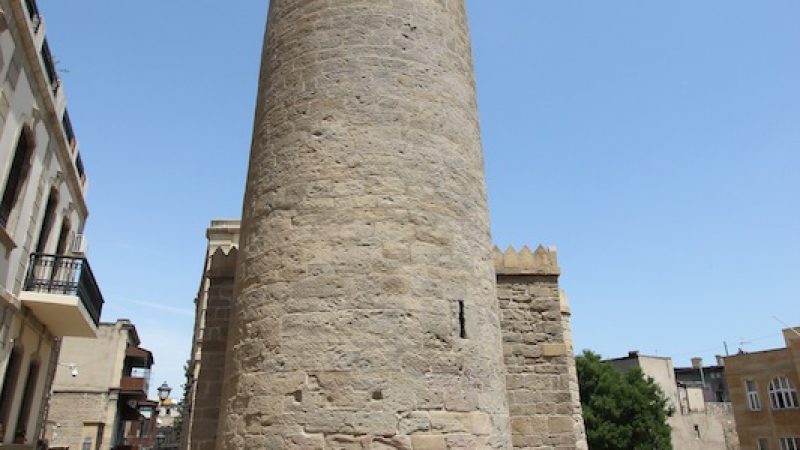
The mosque’s most distinctive feature is its slender cylindrical minaret, which rises above the surrounding historic buildings.
The minaret is decorated with traditional stone details and an Arabic inscription, making it particularly valuable from both architectural and historical perspectives.
Despite its modest dimensions, Muhammad Mosque demonstrates the craftsmanship and architectural knowledge of medieval Azerbaijani builders.
Restoration and Preservation
Throughout its long history, Muhammad Mosque experienced damage, alterations, and several restoration efforts.
Some restoration work carried out during the Soviet period changed elements of the original structure.
Later conservation projects focused on preserving the mosque’s historic appearance and correcting earlier interventions where possible.
Special attention was given to the minaret, ancient stonework, and surviving architectural details.
Today, Muhammad Mosque is protected as part of the historic architectural heritage of Icherisheher.
Visiting Muhammad Mosque
Muhammad Mosque is located within the narrow streets of Baku Old City, within walking distance of the Maiden Tower and other major historical attractions.
Its location makes it an interesting stop during a walking tour of Icherisheher.
Visitors can admire the mosque’s medieval architecture, examine its historic minaret, and discover the story behind the name Siniggala.
The mosque is especially interesting for travelers who appreciate Islamic history, ancient architecture, and the lesser-known historical landmarks of Baku.
Interior access may be restricted, so visitors should not assume that the building is always open to the public.
A visit to Muhammad Mosque offers an opportunity to explore nearly a thousand years of Baku’s architectural history and discover one of the Old City’s oldest surviving monuments.
Address: Baku, Old City (Icherisheher)
Opening Hours: Exterior accessible 24 hours; interior access may be restricted
Open: Daily (exterior)
Entrance Fee: Free (exterior viewing)
Recommended Visit Duration: 10–20 minutes
Rate this page
Rating 4.6 / 5. Votes: 53
No ratings yet