Your cart is currently empty!
You may check out all the available trips and book one that suits you.
Continue Browsing Trips
You may check out all the available trips and book one that suits you.
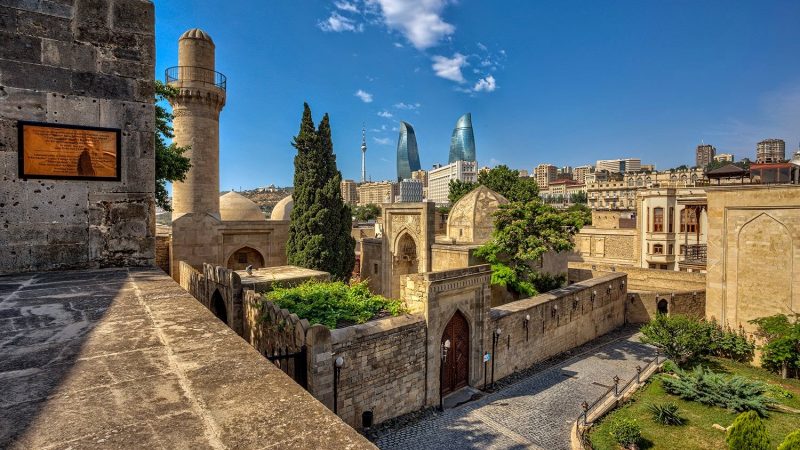
Continue Browsing TripsThe Palace of the Shirvanshahs is one of Azerbaijan’s most remarkable architectural treasures and a masterpiece of medieval Islamic architecture. Located in the heart of Baku Old City (Icherisheher), this magnificent palace complex was built primarily during the 15th century, when the rulers of Shirvan established Baku as their capital after moving their residence from Shamakhi.
The architectural ensemble includes the main palace building, the Divankhana courtyard, the royal mausoleum, a mosque dating from 1441, the remains of a historic bathhouse, and the mausoleum of the renowned scholar Seyid Yahya Bakuvi.
The complex developed gradually over several generations, with new buildings and courtyards added between the medieval and early modern periods. Despite these additions, the entire ensemble displays remarkable architectural harmony.
Its elegant stone carvings, geometric forms, carefully balanced proportions, and distinctive decorative details make the Palace of the Shirvanshahs one of the finest examples of Azerbaijan’s architectural heritage.
Together with the Walled City of Baku and the Maiden Tower, the palace is part of a UNESCO World Heritage Site.
Architecture of the Palace
The palace complex stands on one of the highest points of Baku Old City, surrounded by the ancient fortress walls of Icherisheher.
The main palace building features an unusual architectural layout, combining rectangular structures, polygonal elements, and intricately carved stone surfaces.
Inside, the palace contains numerous rooms, narrow staircases, and an impressive octagonal ceremonial hall.
Today, the palace functions as a museum, displaying archaeological discoveries and historical artifacts that provide insight into life during the Shirvanshah dynasty.
Exhibits include household objects, medieval coins, copper vessels, traditional weapons, jewelry, musical instruments, and examples of Azerbaijani carpet weaving.
Divankhana Courtyard
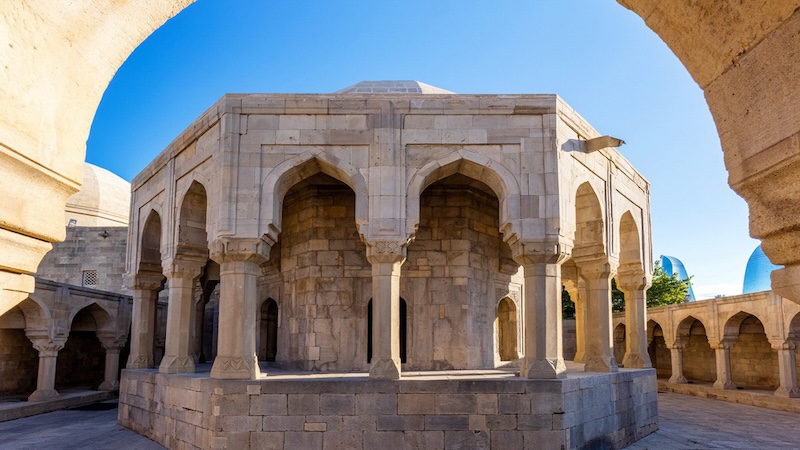
One of the most distinctive parts of the palace complex is the Divankhana, an enclosed courtyard featuring an elegant octagonal pavilion built on a raised stone platform.
Dating from the late 15th century, this remarkable structure is surrounded by an arcade decorated with finely carved stone details.
Its original purpose remains uncertain. Historians have suggested that the Divankhana may have served as a royal reception hall, a meeting place for the state council, a judicial chamber, or a memorial structure.
Whatever its original function, the Divankhana remains one of the most impressive architectural features of the palace.
Mausoleum of Seyid Yahya Bakuvi
The mausoleum of Seyid Yahya Bakuvi dates from the second half of the 15th century.
Seyid Yahya Bakuvi was a prominent scholar, philosopher, and Sufi thinker who lived during the reign of Shirvanshah Khalilullah I.
His mausoleum is an elegant octagonal stone structure topped with a distinctive pyramidal roof.
The building once stood beside the historic Key-Qubad Mosque, and traces of the former connection between the two structures can still be seen.
Key-Qubad Mosque
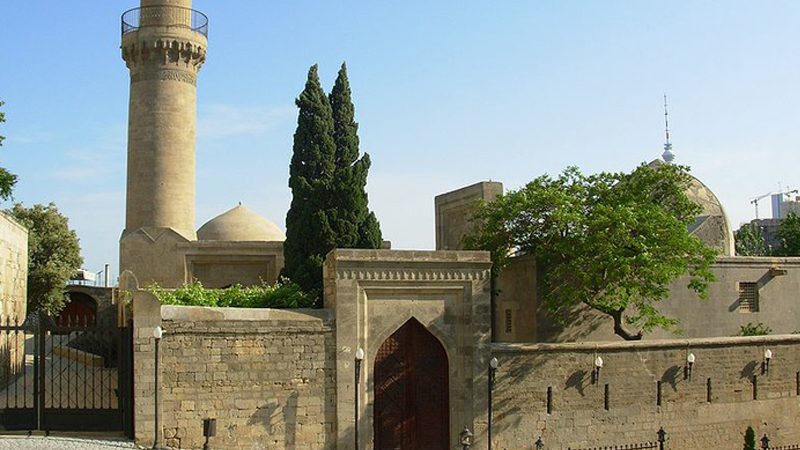
The Key-Qubad Mosque, also known as the Old Mosque, once stood near the mausoleum of Seyid Yahya Bakuvi.
Believed to have been constructed during the late 14th or early 15th century, the mosque was built on the foundations of an earlier religious structure.
Unfortunately, the building was destroyed by fire in 1918, and only archaeological remains survive today.
Excavations conducted during the 20th century revealed evidence of an ancient burial ground surrounding the mosque and mausoleum.
Murad’s Gate (Eastern Portal)
Murad’s Gate, also known as the Eastern Portal, is one of the later additions to the Palace of the Shirvanshahs.
Built in 1585–1586 during the Ottoman period, the portal provided access to the southern courtyard of the complex.
Its impressive stone entrance is decorated with intricate carvings and an Arabic inscription referring to Sultan Murad III.
The portal represents an important later chapter in the architectural history of the palace.
Royal Mausoleum
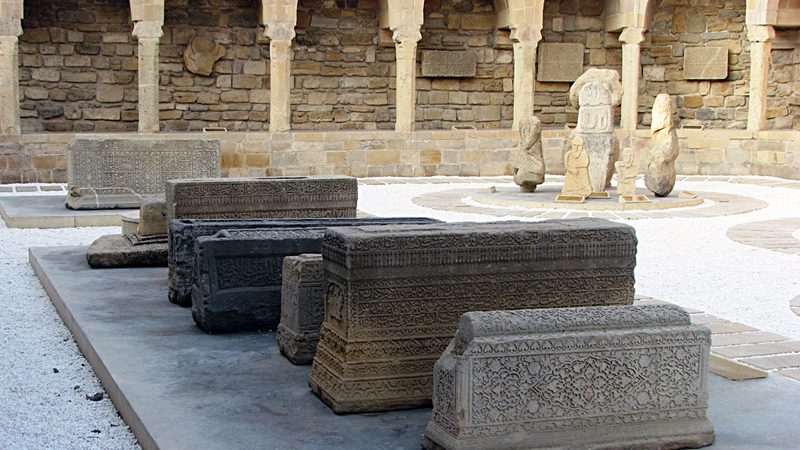
The royal mausoleum, also known as the Turbe, is one of the most significant structures within the palace complex.
Built in the 15th century, it served as the burial place of members of the Shirvanshah dynasty.
The entrance features an elaborately decorated stone portal, showcasing the exceptional craftsmanship of medieval Azerbaijani architects.
Archaeological excavations uncovered several burial chambers and fragments of historic tombstones. Researchers believe that members of Shirvanshah Khalilullah I’s family, including his mother and son, were buried here.
Visiting the Palace of the Shirvanshahs
Today, the Palace of the Shirvanshahs is one of Baku’s most important historical attractions and an essential stop when exploring Icherisheher.
Visitors can walk through its peaceful courtyards, admire the intricate stonework, explore the museum exhibitions, and discover the fascinating history of Azerbaijan’s medieval rulers.
The palace offers a unique opportunity to experience the architectural achievements and cultural heritage of the Shirvanshah dynasty while enjoying the atmosphere of Baku’s historic Old City.
Address: Baku, Old City (Icherisheher)
Opening Hours: 10:00–19:00
Open: Daily
Entrance Fee: 24 AZN (adults), 12 AZN (children aged 5–17)
Recommended Visit Duration: 30–45 minutes
Rate this page
Rating 4.7 / 5. Votes: 267
No ratings yet